



Application Portfolio Management Explained: Inventory, Rationalization, Cost, Risk, and Modernization
Enterprise Architecture · Portfolio Guide
Application Portfolio Management Explained: Inventory, Rationalization, Cost, Risk, and Modernization
Application portfolio management is the discipline of inventorying, assessing, governing, rationalizing, modernizing, and retiring the applications used across an organization. It helps enterprise architecture and technology leaders understand which applications exist, who owns them, what business capabilities they support, how much they cost, which risks they create, and which systems should be kept, improved, consolidated, replaced, or retired.
Application portfolio management matters because most organizations accumulate software faster than they retire it. Business units buy SaaS tools. Legacy systems stay in place because they still support critical workflows. Cloud migrations move applications without fixing ownership or cost issues. Data teams depend on source systems with unclear definitions. Security teams discover unsupported applications. Finance teams struggle to explain license, infrastructure, support, and modernization spend.

What is application portfolio management?
Application portfolio management, often shortened to APM, is a structured way to manage the full set of applications used by an organization. It treats software as a portfolio of assets, costs, risks, dependencies, and capabilities rather than as a disconnected list of tools.
In practice, application portfolio management answers basic but difficult questions: What applications do we have? Who owns each one? Which business capability does each application support? Which applications overlap? Which systems are business-critical? Which are expensive to operate? Which are technically fragile? Which are used by only a few teams? Which applications should be modernized, migrated, consolidated, replaced, or retired?
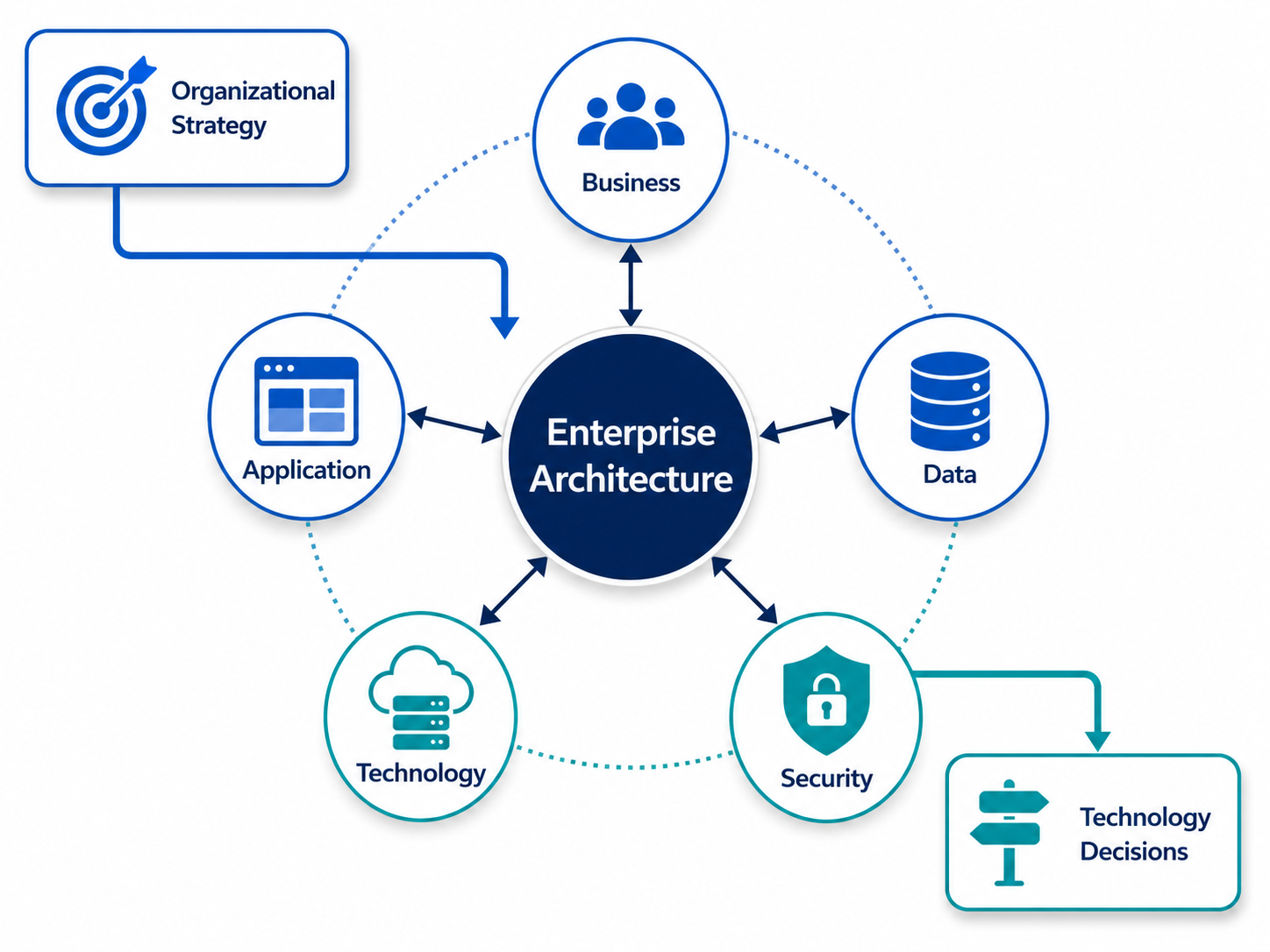
Application portfolio management is closely related to enterprise architecture. Architecture teams use the application portfolio to connect technology decisions to business capabilities, roadmaps, data architecture, cloud strategy, cybersecurity risk, and modernization planning. Without portfolio visibility, architecture decisions become reactive. With portfolio visibility, leaders can make evidence-based choices about investment, simplification, and risk reduction.
The discipline also supports finance, procurement, cybersecurity, cloud teams, DevOps teams, and business owners. Finance needs cost visibility. Procurement needs contract and vendor data. Security needs risk and supportability information. Cloud teams need migration readiness. Data teams need source-system ownership. DevOps teams need deployment and operational context. Business owners need to understand whether applications still support current business needs.
Why application portfolio management matters
Most application portfolios grow through years of local decisions. A team adopts a SaaS platform to solve an urgent workflow problem. A legacy system remains because a critical integration depends on it. A vendor contract renews because no one owns the decision. A cloud migration moves the application but not the underlying complexity. A merger adds duplicate platforms. A regulatory requirement creates another reporting tool. Over time, the portfolio becomes expensive, overlapping, and hard to govern.
Application portfolio management creates visibility before modernization. It helps organizations avoid the common mistake of modernizing the wrong systems first. For example, a cloud migration may not reduce cost if the application is underused, poorly architected, or functionally duplicated. A data governance program may struggle if source applications have unclear ownership. An AI initiative may fail if knowledge sources are stale or fragmented across multiple platforms. A zero trust program may be delayed if critical applications cannot support modern identity controls.
Good portfolio management also makes technology strategy more commercial. Leaders can compare value, cost, risk, usage, and lifecycle status across the portfolio. That makes it easier to identify consolidation opportunities, reduce license waste, prioritize modernization, support cloud cost optimization, and plan roadmaps based on business capability value rather than vendor pressure.
What to include in the application inventory
The first step is a reliable application inventory. The inventory should not be a spreadsheet that is created once and forgotten. It should become a maintained source of truth for portfolio decisions.
| Inventory field | Why it matters | Example use |
|---|---|---|
| Application name and description | Clarifies what the application does and avoids duplicate records. | Portfolio catalog and search |
| Business owner | Defines who owns business value, usage, and lifecycle decisions. | Roadmap approvals and retirement decisions |
| Technical owner | Defines who manages configuration, integrations, security, and operations. | Incident response and modernization planning |
| Business capability | Connects the application to what the business does. | Capability mapping and rationalization |
| Users and usage | Shows adoption, dependency, and possible underuse. | License optimization and value assessment |
| Cost | Captures license, infrastructure, support, integration, and change costs. | Budget planning and FinOps alignment |
| Risk and compliance | Identifies unsupported, sensitive, regulated, or high-risk systems. | Security and audit prioritization |
| Technical health | Measures supportability, age, architecture quality, and maintainability. | Modernization and replacement planning |
| Data dependencies | Shows what data the application creates, consumes, and shares. | Data governance and AI readiness |
| Lifecycle status | Shows whether the application should be invested in, tolerated, migrated, replaced, or retired. | Roadmap sequencing |
Start with the fields that directly support decisions. Many programs fail because they try to capture every detail before they create value. A lightweight but accurate inventory is more useful than a detailed catalog no one trusts.
Application rationalization decisions
Application rationalization is the process of deciding what should happen to each application. The decision is based on business value, technical health, cost, risk, usage, duplication, data importance, and strategic fit.
| Decision | When to use it | Typical action |
|---|---|---|
| Invest | The application supports a high-value capability and has strategic importance. | Fund enhancements, integration, automation, and reliability improvements. |
| Tolerate | The application is useful but not strategic enough for major investment. | Maintain with limited change and monitor cost, risk, and usage. |
| Modernize | The application is valuable but technically weak, costly, or hard to operate. | Refactor, replatform, re-architect, improve data flows, or improve DevOps practices. |
| Migrate | The application should move to a new hosting, cloud, or platform model. | Assess readiness, dependencies, security, cost, and operational changes. |
| Consolidate | Several applications serve similar functions or duplicate capabilities. | Choose a target platform, migrate users/data, and retire redundant systems. |
| Replace | The application no longer meets business, security, compliance, or scalability needs. | Run vendor selection, migration planning, and controlled cutover. |
| Retire | The application has low value, low usage, high cost, or unacceptable risk. | Archive data, remove access, end contracts, and decommission infrastructure. |
The best rationalization decisions combine quantitative and qualitative evidence. Cost, user count, incidents, support age, and uptime matter, but so do business criticality, customer impact, regulatory obligations, and strategic direction.

Application portfolio scorecard
A scorecard helps compare applications consistently. It should be simple enough for stakeholders to understand, but structured enough to support roadmap decisions.
| Scorecard area | Question | Example rating |
|---|---|---|
| Business value | How important is the application to a critical business capability? | High / Medium / Low |
| Functional fit | Does it meet current process and user needs? | Strong / Adequate / Poor |
| Technical health | Is it supportable, maintainable, scalable, and secure? | Green / Amber / Red |
| Cost efficiency | Is spend justified by usage and business value? | Efficient / Questionable / Wasteful |
| Risk | Does it create security, compliance, operational, vendor, or resilience risk? | Low / Medium / High |
| Data importance | Does it create or manage critical data used in reporting, operations, or AI? | Critical / Useful / Limited |
| Modernization priority | Should this application be improved, migrated, consolidated, or retired soon? | Now / Next / Later |
Use the scorecard to make tradeoffs visible. A high-value but technically weak application may need modernization. A low-value and high-cost application may be a retirement candidate. A duplicate platform may be a consolidation candidate. A critical application with sensitive data may need stronger security controls before migration or AI integration.
Roles and operating model
Application portfolio management is cross-functional. It should not belong only to enterprise architecture or only to IT asset management. The operating model needs business, architecture, finance, security, cloud, data, and delivery participation.
| Role | Primary responsibility | Typical artifacts |
|---|---|---|
| Enterprise architecture | Maintains portfolio model, capability mapping, standards, and rationalization method. | Portfolio map, capability map, lifecycle model, decision records |
| Business owners | Own business value, process fit, adoption, and lifecycle decisions. | Capability priorities, value assessment, retirement approvals |
| Application owners | Maintain application records, integrations, change plans, and operational ownership. | Application profile, roadmap, runbook, dependency list |
| Finance / FinOps | Connects portfolio decisions to cost, licensing, cloud usage, and budget accountability. | Cost model, license data, cloud spend view, optimization backlog |
| Security and risk | Assesses access, compliance, vulnerability, vendor, and operational risk. | Risk register, control gaps, security review, exception log |
| Data governance | Maps data ownership, classification, lineage, retention, and AI readiness. | Data dependency map, classification record, source approval |
| Cloud and DevOps teams | Assess migration readiness, operational health, observability, CI/CD, and reliability. | Migration assessment, deployment profile, SLOs, monitoring baseline |
90-day implementation roadmap
A practical application portfolio management program can start in 90 days. The goal is not to create a perfect enterprise catalog immediately. The goal is to build enough visibility to support real decisions.
| Timeframe | Focus | Deliverables |
|---|---|---|
| Days 1–30 | Portfolio baseline | Initial application inventory, owner map, business capability map, critical application list |
| Days 31–60 | Assessment model | Rationalization criteria, cost fields, risk fields, technical health model, duplicate-app analysis |
| Days 61–90 | Decision and roadmap | Application scorecard, modernization candidates, retirement list, migration priorities, governance cadence |
Start with the applications that matter most: critical business systems, high-cost platforms, unsupported systems, duplicate SaaS tools, systems with sensitive data, and applications that block cloud, data, AI, or security initiatives. Do not wait for a perfect inventory before making visible improvements.
How APM connects to the governance cluster
Application portfolio management sits at the center of the governance and modernization backbone. It gives architecture teams the application-level facts needed for roadmap planning. It gives cloud governance teams the workload context needed for migration and cost decisions. It gives AI governance teams source-system visibility. It gives zero trust teams application and access context. It gives data governance teams source ownership. It gives DevOps teams a clearer view of operational maturity and deployment patterns.

Common mistakes
Building an inventory without decisions
An inventory is useful only if it supports action. Every portfolio field should help with ownership, cost, risk, modernization, consolidation, migration, or retirement decisions.
Leaving business owners out
Application value is a business question, not only a technical question. Business owners must participate in functional fit, usage, roadmap, and retirement decisions.
Ignoring total cost
License cost is only one part of the picture. Infrastructure, integration, support, data remediation, security controls, vendor management, and change effort also matter.
Confusing cloud migration with modernization
Moving an application to cloud infrastructure may not improve architecture, user experience, data quality, operating cost, or reliability. Migration decisions should be tied to portfolio value and technical health.
Skipping decommissioning
Many rationalization programs identify retirement candidates but fail to retire them. Decommissioning needs data archival, access removal, dependency cleanup, contract termination, and business sign-off.
FAQ
What is the purpose of application portfolio management?
The purpose is to manage enterprise applications as a portfolio of business value, cost, risk, ownership, usage, and technical health. It helps leaders decide where to invest, modernize, consolidate, replace, or retire applications.
How is application portfolio management different from IT asset management?
IT asset management usually focuses on assets, licenses, contracts, and lifecycle tracking. Application portfolio management focuses more on business capability fit, application value, technical health, modernization, risk, and roadmap decisions.
Who owns application portfolio management?
Enterprise architecture often coordinates the practice, but ownership is shared across business owners, application owners, finance, procurement, security, cloud, data governance, and DevOps teams.
What are common application rationalization decisions?
Common decisions include invest, tolerate, modernize, migrate, consolidate, replace, and retire. The decision depends on business value, cost, risk, usage, duplication, data importance, and technical health.
How does application portfolio management support cloud cost optimization?
It identifies which applications should move, stay, be refactored, be consolidated, or be retired. This prevents organizations from moving unnecessary or duplicated workloads into cloud environments and helps align spend with business value.
How does application portfolio management support AI readiness?
AI systems need trusted source applications, clean data, documented ownership, permission-aware access, and reliable integrations. Application portfolio management helps identify which systems can safely support AI use cases.
Recommended reading path
- Enterprise Technology Stack Explained
- Enterprise Architecture Roadmap Example
- Cloud Governance Framework
- Data Governance Framework
- Zero Trust Maturity Model
- DevOps Maturity Model
Final takeaway
Application portfolio management is one of the most practical ways to turn enterprise architecture into business value. It gives leaders a shared view of applications, owners, capabilities, costs, risks, data dependencies, and modernization options. The strongest programs start with a usable inventory, connect applications to business capabilities, apply a simple rationalization model, and turn the portfolio into a roadmap. When the portfolio is managed well, organizations can reduce waste, improve security, strengthen data governance, support AI readiness, and modernize with less guesswork.


